Sherry 101 – Basics of this Noble Wine!
 Recently, I have seen on the web a number of wine writers who have dismissed sherry as wine “not drunk by Spaniards” and better left to “Grandma at Christmas”. I’m shocked and a bit irked. Why has such a noble beverage taken a back seat in the world of wine? Sherry should not be disregarded so off-handedly. Sherry in its seemingly infinite forms is a drink that I feel I need to defend and perhaps explain a bit.
Now I’m not saying that everyone is dismissing sherry, just those outside of the 5-10% of us geeks that read trade publications, and follow wine bulletin boards more closely than our own heart rate. In fact, in Robert Parker’s last issue of his Wine Advocate, he gave rave reviews to 3 different bodegas and the scores ranged from 87 points all the way up to 96 points. Whether you agree with Parker’s scores or not, if someone with so much knowledge about wine can put a sherry in the same league as a first growth Bordeaux, maybe there is something to be said for it.
What is Sherry?
The simplest answer is that Sherry is fortified (generoso) wine made from white grapes in the area surrounding Jerez de la Frontera in the region of Spain known as Andalucia. It also happens to be one of the oldest wine making areas in all of Spain. The name Sherry itself comes from an English corruption of the word Jerez, pronounced: he-reth. Looking closer, the DO of Jerez is made of three regions: Jerez de la Frontera, Sanlucar de Barrameda, and Puerto de Santa Maria, each of which produces their own unique style.
The region is unique for its chalky white soil called albariza, which is so white, one might think the soil is covered in a thick layer of snow. Its chalk like nature traps the winter’s rains and holds them tightly so that the vines have plenty of moisture for the long hot summers that lie ahead. Without this moisture, the vines would likely shrivel up and die under the relentless Andalusia sun.
To make the large topic of Sherry easily understood, we are going to focus on the two main styles of sherry: Fino and Oloroso. (Hopefully in the near future, I can come back and go into more depth on the various individual styles and methods of production.) Within these categories there are various styles including but not limited to: Manzanilla, Fino, Amontillado, Oloroso, Pale Cream, and Cream. But to start, we must first look at the unusual method used for making sherry known as the solera method.
The solera system is a technique that employs fractional blending. Basically this means that each harvest new wine is blended with old wine. This is accomplished by building a pyramid like stack of barrels, one on top of the other, where the oldest wine is at the bottom and the newest wine is at the top. In this way, the wine at the bottom of the stack is drawn off to be bottled, and in theory, contains wine from the very first time the solera was filled up. The goal is to add complexity to the wine over time, while mitigating the harmful effects of bad vintages.
How do we get Different Styles?
At its root, sherry is what it is because of a film forming yeast called flor. If you were to see a barrel of healthy Fino sherry, it would appear to some people as having something very wrong with it. Every year, in a percentage of the newly filled casks a yeast called flor begins to grow and develop a thick layer of yeast cells that blanket the top of the wine within the cask, protecting it from oxidation. In most casks of wine, there is a small percentage of air touching the wine, usually creating a slightly oxidized flavor. Sometimes this is actually wanted, as in the case of Tawny ports and Oloroso Sherries – the longer the wine is in contact with this air, the darker it will become, taking on colors of dark wood and rich caramel. With Fino sherry, the flor protects this from happening, and a wine aged 20 years is still as crystal clear, light and airy, as it was the day it was bottled. In time, the protected wine becomes softer in the mouth and more complex as the various acids and organaleptic qualities breakdown and transform themselves. For this reason, lighter styles of sherry are said to taste the best directly from the cask or shortly after bottling.
Wines that develop the flor, a process that is neither guaranteed nor exactly understood, can produce one of the following styles:
Fino – Typically served very cold. Pale in hue they tend to have an intense salt air nose. Sometimes some nuttiness plays a part too, though very lightly. In the mouth a Fino can be quite austere, and for many, it can take time before one truly falls in love with it. Sharp bright acidity framed by a light salty-nut quality. Sometimes I find light melon flavors in the mid-palate, but not always. My favorite way to get someone to fall in love with this unique beverage is have them bite into an olive and then have a sip.
Manzanilla – A style unique to Sanlucar de Barrameda a city in the south of Spain. This style is the only type of sherry that is so site specific it cannot be produced anywhere else. Very light, very crisp, and soft in the mouth, it calls for drinking it alone on a hot summer’s day. Manzanilla is the most ethereal of all Sherries and some say the best examples are on a level all their own. Most Sherries that you will come across in bars in Madrid are lighter examples, almost clear in color with a similar salt air nose, though a bit more delicate. On the palate: an olive pit quality and sometimes melon. If you have a chance, try it with a white anchovy or with some of the smoked bacalou.
Like I said, I’m going to keep this simple, and the above two examples do a good job of demonstrating the main styles of flor-effected wines. One exception is Amontillado (ah-mo-tee-ya-doh) where the wine begins as a flor affected wine and eventually the flor dies before the wine is completely finished developing. Then the wine begins to oxidize slowly giving you a wine that is somewhere in-between a Fino and the next style I will talk about, Oloroso.
Amontillado is basically a wine that has had the chance to oxidize and mature while in contact with air. After the primary fermentation if the wine doesn’t start to show the signs of developing a flor it is set aside for a solera of like wines. In the solera of non flor affected wines, it is aged in the same method as the Finos with the exception of its continual contact with air. The wine with time becomes darker and richer.
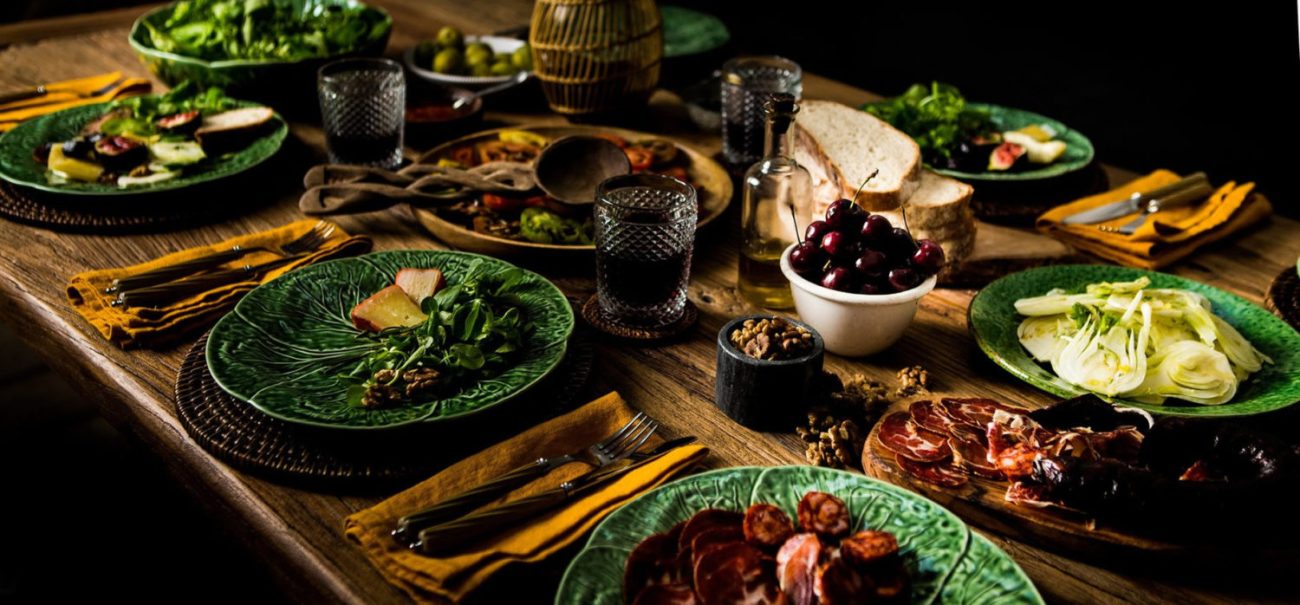
Oloroso can be dark, thick and brooding. With this style, we head into another class of Sherry where age is important. Oxidative properties show themselves and you are left with a caramel-vanilla nose, dusted with a salted hazelnut perfume. In the mouth it can feel heavy with a richness and depth that wants to linger on your tongue. Look too for Olorosos both dry and sweet, the diversity is truly amazing. As for food pairings, it can do wonderful things to the rich cured meats you find throughout all of Spain.
In the end, most Sherries are dry with two exceptions, Cream and PX or Pedro Ximenez. I’m going to leave Cream for another time and focus rather on Pedro Ximenez.
Pedro Ximenez is a grape that is harvested at a naturally high sugar level. They are then laid out on straw mats in the hot sun to release some of their liquid. This leaves the wine maker with grapes incredibly high in sugars. The resulting wines are a diabetic’s nightmare and one of the most decadent treats around. This is the one style of sherry that I feel is most interesting when it’s at its sweetest. The first time you try it, you may think it is somewhat like downing a bottle of maple syrup. Its viscosity alone makes Port wine seem watery. On the flip side there are many dry versions of PX, but the wines that tend to get the most praise are the sweet ones.
Pedro Ximenez- Dark is reddish brown with a syrupy consistency; a wine that is over the top and first on the list for any gluttonous celebration. The nose tends to focus on aromas of dried fruit, dark spices, and salted almonds and hazelnuts. At its best, you slip into a diabetic coma and your mind will dance with euphoric delusions of grandeur. In fact it’s such a treat that people here take their best vanilla ice cream and drizzle just a little over the top. Nothing better on a hot Spanish day!
Wrapping up, this is the quick intro to Sherry. I know I left out a lot, but there are so many styles beyond the ones I covered, not too mention all the fun blending that can occur from bodega to bodega. My main goal is to get you to try it. Please think outside the grandma paradigm – this is not an old person’s drink (not that I have anything against old people, I love my grandma and she loves her Bailey’s), but rather a drink that should be explored and played with.
Finos were made for Spanish Tapas! Olorosos for contemplation. And PX’s for pure decadent revelry. Just remember don’t be afraid of Sherry, it truly is one of the wine worlds, best kept secrets.
Till soon, Ryan
Cooking Class with Michelin Star Chef
Cook alongside Portugal’s most celebrated and progressive Michelin-starred chefs, while savoring one
Premium San Sebastian Gastronomy Tour
Anyone who adores food, needs to visit the northern Spain’s Basque Country at least once. Gastronomy,
Porto Walking Food Tour
This delicious food tour is more than a culinary experience, it’s a love letter to Porto highlighting